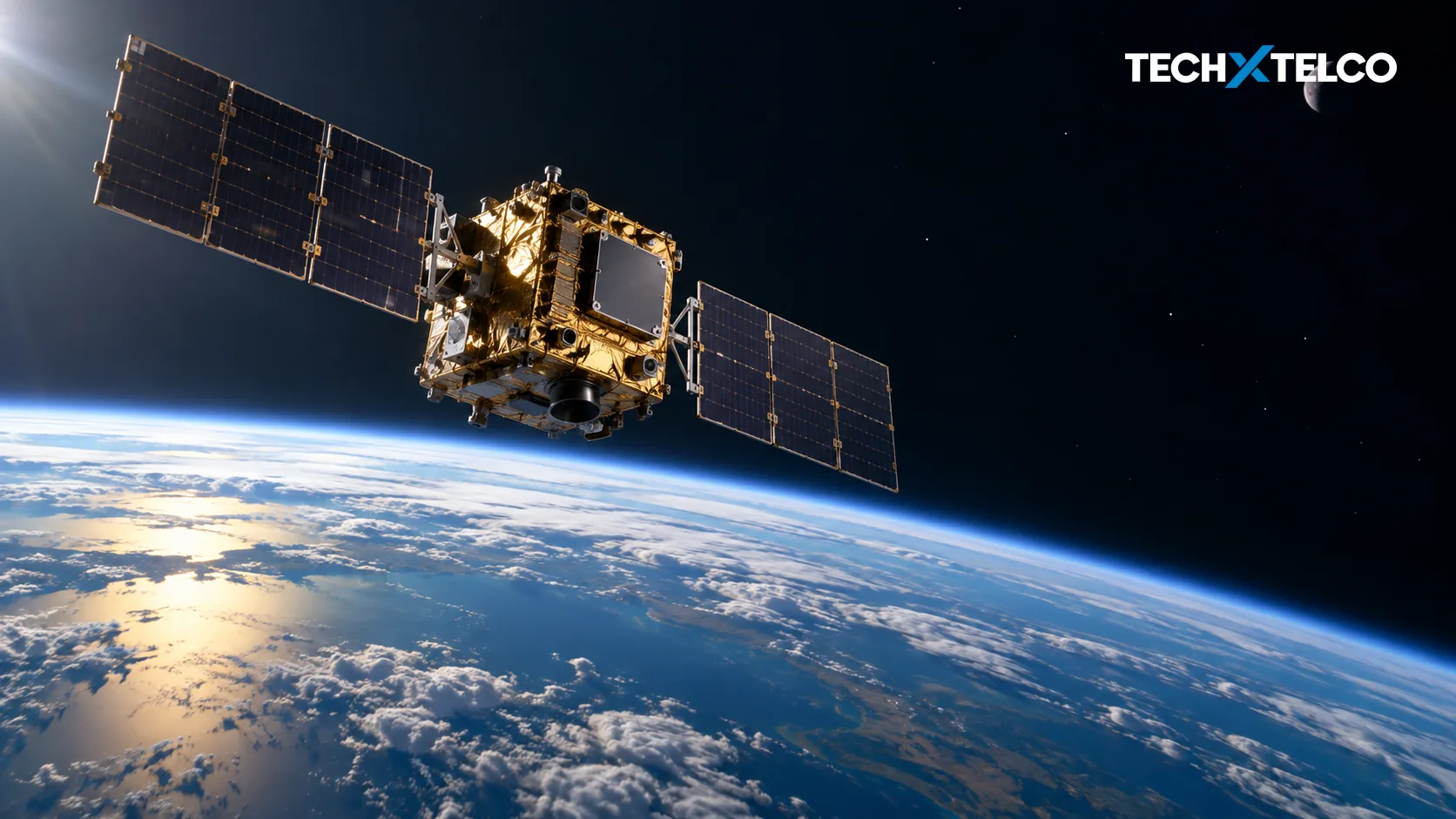

Google is preparing to test whether its AI chips can work in orbit. Project Suncatcher sounds like a plan to move the cloud into space, but the immediate task is much narrower: put experimental hardware through conditions a terrestrial server room never encounters.
What you need to know
In its 24 September update, Google describes a prototype satellite planned for an upcoming SpaceX Transporter-18 mission with Planet. It will test its Tensor Processing Units, or TPUs. An operating commercial AI data centre in space remains a research ambition, not something this announcement delivers.
What is new, and what was already planned?
Google first announced Suncatcher in November 2025. The broad idea was a network of solar-powered satellites carrying its AI processors, with an initial two-satellite learning mission planned for early 2027. The September update adds an earlier hardware test and retains a later 2027 milestone for testing links between satellites.
Those stages answer different questions. Getting a processor to work on one spacecraft would be useful evidence. It would not automatically demonstrate that many spacecraft can cooperate economically as a single computing system.
Three engineering problems behind the headline
What the tests need to establish
The difficult part is keeping useful computation going outside a server room.
Hardware survival
- Launch vibration and radiation can disrupt or damage electronics. Ground tests are preparation for flight evidence.
Heat removal
- With no surrounding airflow, the equipment needs a way to move heat to radiators and release it.
Communication
- Distributed workloads need data to move reliably between spacecraft, not simply a working chip on each one.
Google says its ground testing included vibration, proton-beam exposure and a thermal-vacuum chamber. It plans to gather orbital data before drawing conclusions about later missions. Future designs use precise optical links between neighbouring satellites.
Why consider space at all?
The original proposal asks whether access to solar energy in orbit could support large amounts of machine-learning computation. Think of it as an investigation into where computing infrastructure could eventually go, rather than a new Gemini feature. The physics, launch economics and operational reliability all have to work together.
Google Research’s earlier cost analysis is conditional. It models launch prices potentially falling below US$200 per kilogram by the mid-2030s; under those assumptions, launch and operation costs might approach reported terrestrial data-centre energy costs on a per-kilowatt-year basis. That comparison is not a current price quote, nor proof that an entire orbital service would be cheaper.
The same research describes unresolved thermal management, ground communications and reliability challenges. Its radiation testing was encouraging, but the memory subsystem was more sensitive than other parts of the tested hardware. “A chip survived a laboratory test” and “a fleet can run dependably for years” remain different claims.
What would count as convincing progress?
Our first question after a launch would be whether the processor completed useful work reliably, with a clear account of errors and interruptions. After that, we would want to see how the communications test performed and what had to change between the laboratory and orbit. A beautiful spacecraft photograph cannot answer those questions.
It is also worth asking what a cost comparison includes. Launch, operation, energy and the price of a complete service are different measures. Before comparing a space-computing claim with a conventional data-centre deal, check that the two numbers actually describe the same thing.
For the nearer-term infrastructure story: Anthropic’s Akamai cloud deal
Does this change anything for an Australian AI user today?
There is no consumer action to take on the strength of this test plan. It is not a new broadband service, a local data-residency commitment or a promise that your next AI response will come from orbit. Its interest lies in the engineering evidence still to come.
If your question is what you can actually use now, our Gemini voice coverage separates available tools from the research announcements around them.
What is available now: Google’s Gemini 3.8 AI voices
Sources and further reading
Google: September Suncatcher mission updatePrototype flight, hardware survival, cooling and satellite interconnectivity.blog.google
Google Research: space-based AI system designRadiation tolerance; economic feasibility; launch-cost assumptions; future directions.research.google
Michel Elijah covers technology, streaming and online security for Tech X Telco. He writes practical how-to guides on everything from email troubleshooting to spotting the latest scams doing the rounds in Australia, with a focus on clear steps anyone can follow.
Spotted something wrong? Corrections are recorded in the open. Report a correction