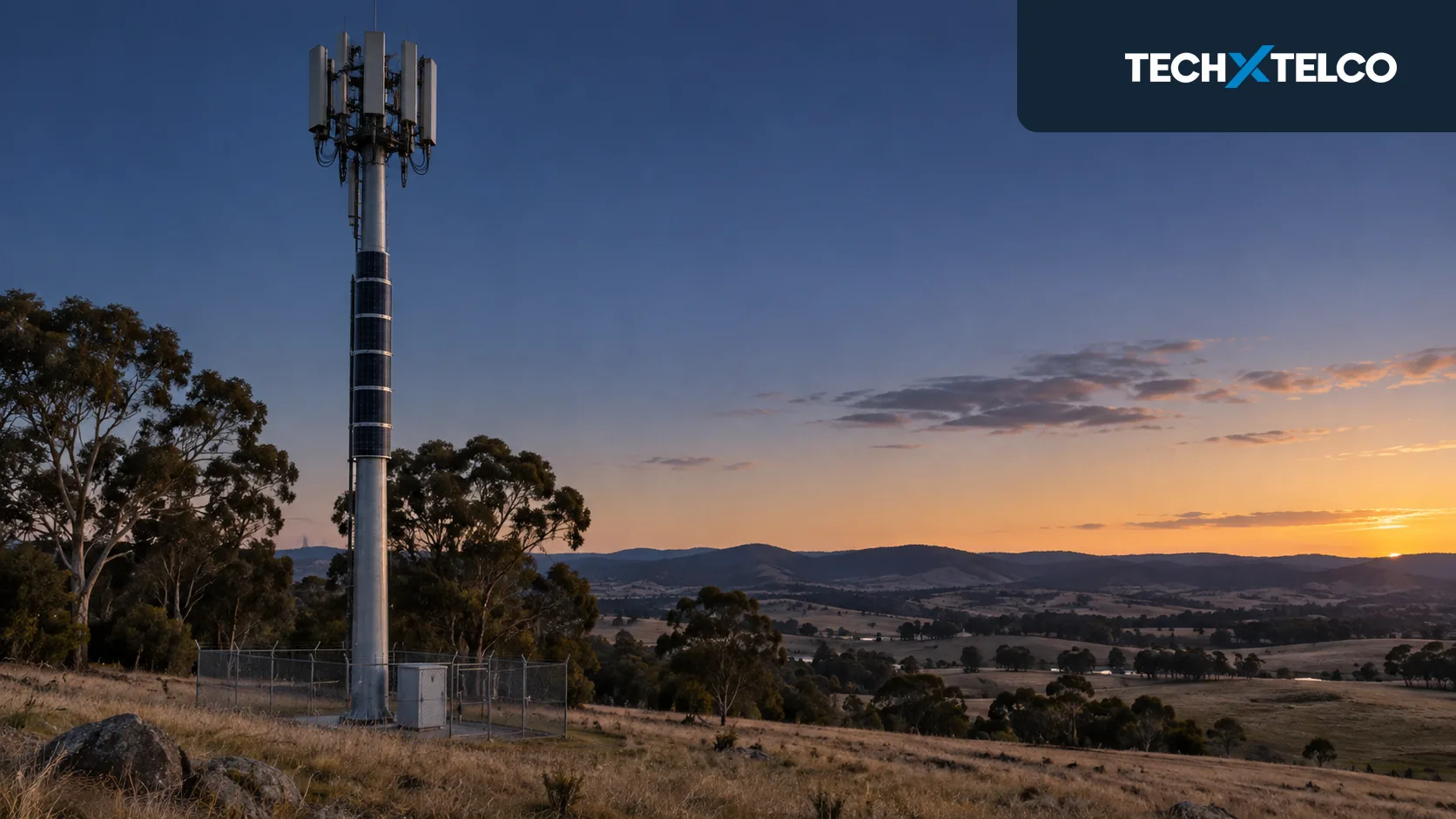

NBN is testing whether solar panels wrapped around a fixed wireless tower can help keep connections running when mains power fails. The trial is at New Gisborne in Victoria’s Macedon Ranges, according to its 24 September announcement.
What you need to know
The solar sleeve is a network trial, not a new home internet plan. Combined with existing batteries and other energy-saving features, the system is designed to support an equipped site for up to 12 hours in a power outage. That is not a promise that your household will receive 12 hours of internet.
What is wrapped around the tower?
Instead of a separate bank of rigid panels, the trial uses flexible solar laminate around the north-facing side of a 40-metre monopole. NBN says Decon developed the sleeve, battery system and mounting solution in Victoria. Using the existing pole is the distinctive part of the design.
Early results from the month-long proof of concept indicate generation equivalent to up to 40% of the site’s power demand during daylight hours, depending on weather. That figure describes daylight generation; it is not the percentage of customers protected or a claim that the tower runs on solar alone around the clock.
Two numbers, two different meanings
Keep the trial’s generation result separate from its backup design.
Up to 40%
- Reported equivalent share of site power demand generated during daylight; weather dependent.
Up to 12 hours
- Design target for an equipped site using solar, batteries and other measures during an outage.
The tower is only one part of your connection
NBN’s blackout guidance says fixed wireless can lose service because power fails at the tower, in the fibre network or at your premises. Keeping one of those parts alive does not automatically protect the others. Each mains-powered item you need at home also needs an appropriate backup supply.
That is the bit to remember if the headline sounds like a solution for your next blackout. A working tower cannot power your router through the air. Equally, keeping a router running will not restore a failed link further up the network. Backup planning needs to cover the whole path you rely on.
What can you check at home now?
First confirm that your service is fixed wireless; a wireless connection between your laptop and router does not establish that. Look at the technology listed for your NBN service or ask your provider. This particular trial is about the access network, not the Wi-Fi signal inside a house.
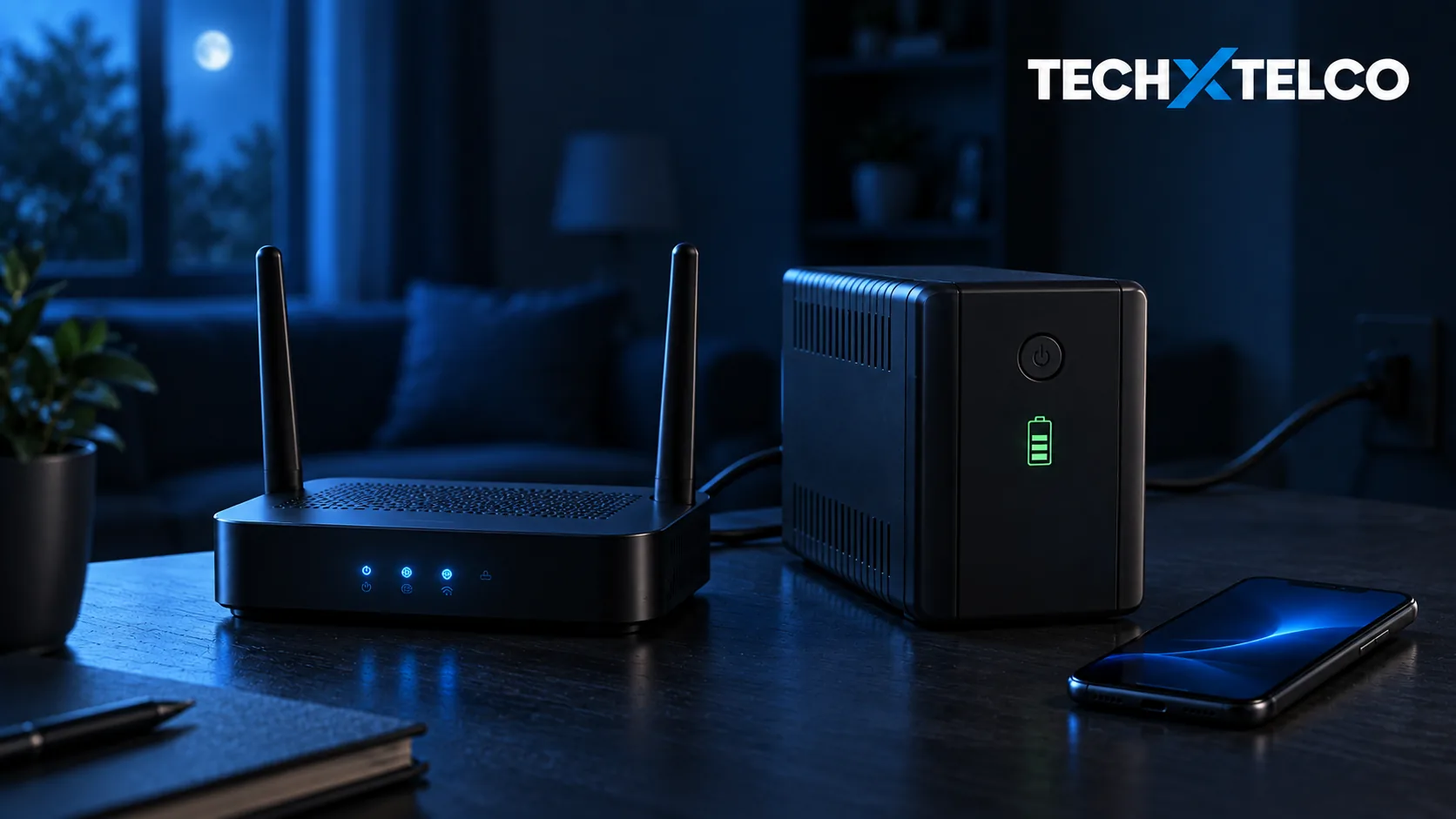
Then take a photo of your internet equipment and its power labels while everything is working. It gives your provider or backup supplier something concrete to assess, rather than asking whether a battery will “run the internet”. Include both the NBN equipment and your router. Do not assume a battery that charges a phone has the right outputs or capacity for either.
If you depend on a medical alarm or another safety-critical device, ask its supplier about its own communication and power requirements. NBN’s general advice is to discuss alternative arrangements with the equipment provider. A household internet backup and an alarm’s backup are not necessarily the same thing.
Our practical guide: will your internet work during a power outage?
What would make this more than a promising trial?
For customers, the useful follow-up would be a deployment plan: which sites qualify, how performance varies through poor weather, and what backup duration is achieved under real operating loads. These are questions for the next stage, not results established by the announcement.
There is a sensible idea here—use tower space to generate power close to where it is consumed. The immediate takeaway for a household is more modest: network resilience may improve, but keep checking your own equipment and your own fallback. This announcement does not change either automatically.
Michel Elijah covers technology, streaming and online security for Tech X Telco. He writes practical how-to guides on everything from email troubleshooting to spotting the latest scams doing the rounds in Australia, with a focus on clear steps anyone can follow.
Spotted something wrong? Corrections are recorded in the open. Report a correction